Buying a duplex in Lancaster can be one of the smartest ways to break into real estate, but it comes with a few local rules you do not want to learn the hard way. If you are hoping to live in one unit, rent the other, or simply understand how a two-unit property works in the city, you need more than a general homebuying checklist. You need a Lancaster-specific plan for zoning, licensing, financing, and costs. Let’s dive in.
Why a Lancaster duplex attracts buyers
A duplex can give you flexibility that a single-family home usually cannot. You may be able to live in one unit and rent the other, create space for extended household needs, or hold a property that can produce income over time.
Lancaster City also shows signs of a strong renter presence compared with the county overall. Census QuickFacts reports an owner-occupied housing rate of 48.6% in Lancaster City versus 69.8% in Lancaster County, which points to a larger renter base in the city. Rent data from several sources also suggests steady demand, though the figures vary by source and date.
That said, rental demand should be treated as a signal, not a shortcut. HUD reported a 4.1% apartment vacancy rate and $1,473 average rent in the Lancaster metro in the first quarter of 2024, while Zillow listed average rent around $1,500 as of May 2026. These numbers can help frame the market, but you should still verify realistic rent for the specific duplex you want to buy.
What counts as a duplex in Lancaster
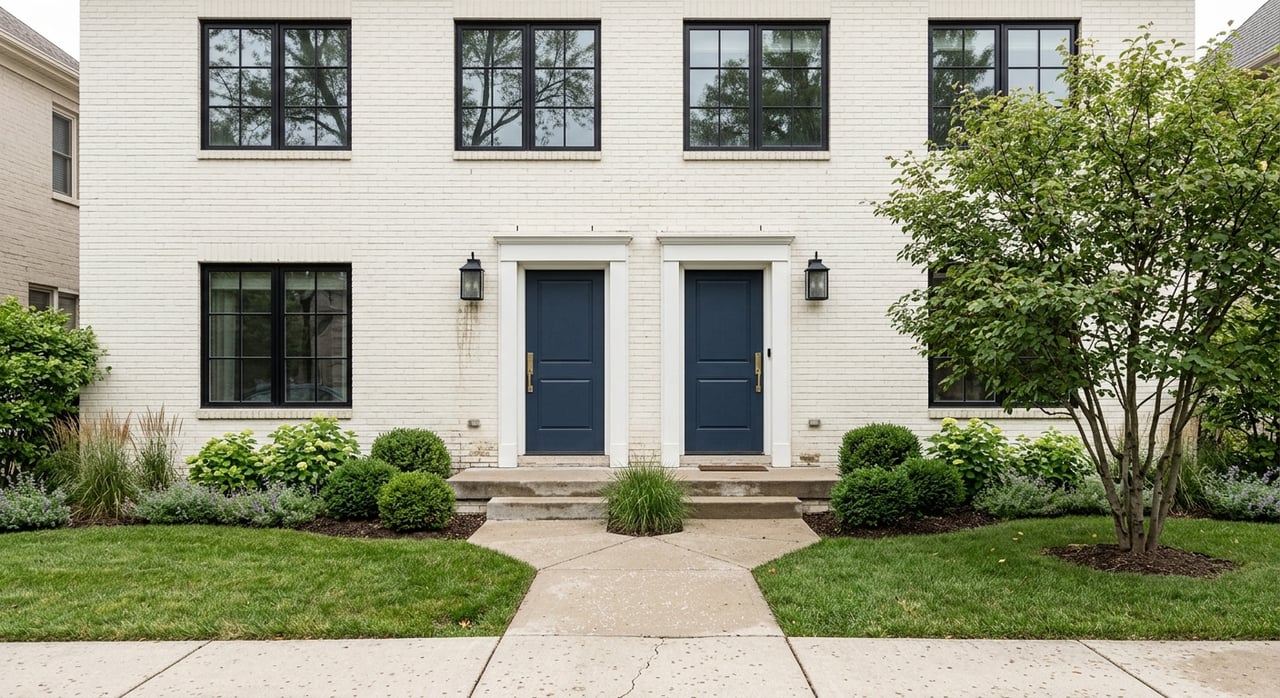
In Lancaster City, local classification matters. The city treats each unit in a two-family dwelling as a separate residential rental unit when that unit is rented, which can trigger the city’s rental licensing and inspection requirements.
You also need to confirm the property is legally configured as a two-family use. The city zoning ordinance controls permitted uses, parking, lot dimensions, building height, coverage, and setbacks, and the zoning officer enforces those rules.
This step is especially important if the building was converted at some point. A property that looks like a duplex in practice may not always be recognized as a lawful two-family property under current records or zoning status.
Why legal use matters early
If you skip legal-use verification, you could end up with financing, permitting, or rental problems after you are already under contract. Before making an offer, confirm the parcel’s zoning district and ask whether the duplex is a lawful two-family property, a conversion, or a nonconforming use.
For some financing programs, the property layout matters too. PHFA guidance states that two-unit properties must be side-by-side or stacked, and a finished basement, attic, or unit above a garage does not qualify as a two-unit property for that purpose.
Lancaster costs to model before you buy
Many first-time duplex buyers focus on the down payment and monthly mortgage. In Lancaster, you also need to model transfer tax, property taxes, insurance, maintenance, vacancy, and any city compliance costs if you plan to rent out a unit.
Property taxes in Lancaster are based on assessed value, not market value. For Lancaster City, the 2025 county-municipal and 2025-2026 school millage total is 41.0286 mills, which works out to about $4,103 in annual property tax per $100,000 of assessed value before any applicable relief.
A purchase in Lancaster City also generally faces 2% total realty transfer tax before exemptions or contract split. That includes Pennsylvania’s 1% realty transfer tax plus the city’s 1% realty transfer tax. On a $250,000 purchase, that is about $5,000.
A simple cost snapshot
Here is a basic example of costs to remember when you start running numbers:
| Cost item | Lancaster note |
|---|---|
| Property taxes | About $4,103 per $100,000 of assessed value |
| Transfer tax | About 2% total before exemptions or contract split |
| Rental license fees | $250 per unit biennially for 1 to 6 units |
| Transfer of rental license | $200 per unit |
These are not your only expenses, but they are easy to overlook when you are moving quickly. A duplex can still work well financially, but only if you model the real costs from the start.
Financing options for a first duplex
If you plan to live in one unit, owner-occupied financing may open more options than you expect. HUD states that FHA loans can be used on 1 to 4 unit properties with as little as 3.5% down.
Conventional financing may also be possible with a relatively low down payment. Fannie Mae’s eligibility matrix shows owner-occupied 2 to 4 unit purchases can go to 95% loan-to-value under standard DU eligibility, while Freddie Mac notes that conventional loans with less than 20% down typically require private mortgage insurance.
Pennsylvania buyers may also want to explore PHFA programs. PHFA allows two-unit properties under FHA, VA, or Keystone Home Loan conventional, but not under HFA Preferred.
PHFA details worth knowing
PHFA can be especially helpful if down payment and closing costs are a concern. The Keystone Advantage Assistance Loan can provide up to 4% of the purchase price or market value, capped at $6,000, toward down payment and closing costs.
PHFA also offers free homebuyer counseling. If your FICO score is below 680, PHFA requires an in-person homebuyer course before closing.
If you want rental income from the second unit to help you qualify, ask your lender exactly how that income will be underwritten. PHFA guidance shows that rental-income underwriting can require market-rent and gross-rent-multiplier support.
Rental rules in Lancaster City
If either unit will be rented, Lancaster City’s rental rules need to be part of your plan before closing. The Bureau of Property Maintenance & Housing Inspections administers the city’s rental program and lead-safety rules.
The city will not issue a rental license until the unit passes inspection and any outstanding municipal charges tied to the property are paid. The city also systematically inspects rental properties at least every six years.
For properties with 1 to 6 units, the rental-license guide lists a fee of $250 per unit every two years. It also lists a $200 per unit transfer-of-rental-license fee.
Lead-safety and older homes
Older housing stock can be part of Lancaster’s appeal, but it requires careful planning. If the property is a pre-1978 rental, additional lead-safety obligations apply under the city’s rules.
If you plan to renovate a pre-1978 building, EPA lead-safe Renovation, Repair and Painting rules apply to firms disturbing lead-based paint. That makes it important to budget for repairs and use the right professionals from the start.
Your duplex due diligence checklist
Before you write an offer, slow the process down enough to answer the right questions. A few early calls can save you time, money, and stress.
Use this checklist as your starting point:
- Confirm the zoning district and legal two-family status.
- Ask what each unit can realistically rent for today.
- Estimate taxes, transfer tax, insurance, maintenance, and vacancy.
- Ask your lender how rental income will be counted, if at all.
- Check whether city rental licensing will apply right after closing.
- Review lead-safety obligations if the building is older.
- Identify any municipal charges that must be cleared before a rental license can be issued.
You do not need to figure this out alone. The best early contacts usually include a Lancaster-area lender with two-unit loan experience, a PHFA-approved counselor or lender, a home inspector, a title company, an insurance agent, and a CPA familiar with rental-property taxes and depreciation.
Common mistakes first-time duplex buyers make
One common mistake is assuming a duplex is automatically legal because it has two kitchens or two entrances. In Lancaster, you need to verify how the property is recognized and whether the current use aligns with zoning and city records.
Another mistake is using broad rent estimates without checking the specific property. Citywide or metro rent figures are useful for context, but they are not enough to underwrite a purchase responsibly.
A third mistake is forgetting compliance costs. Rental licensing, inspections, transfer fees, and possible lead-related work can affect your timeline and budget more than many buyers expect.
How to buy with more confidence
The best duplex buyers stay practical. They check legal use, run conservative numbers, and build a local team before they commit.
If you are buying in Lancaster, that local-first approach matters. City zoning, rental rules, taxes based on assessed value, and property-specific financing details can all shape whether a duplex is a solid fit for your goals.
A duplex can be a smart first purchase, especially if you want flexibility and long-term upside. You just need to go in with clear eyes, careful math, and the right guidance. If you want help thinking through your next move in Central Pennsylvania, connect with Ajay Patel for practical, responsive guidance.
FAQs
What qualifies as a duplex in Lancaster City?
- A duplex is generally a two-family dwelling, but you should confirm the property is legally configured and recognized as a lawful two-family use under Lancaster City zoning and records.
What rental rules apply to a duplex in Lancaster City?
- If either unit will be rented, the property may fall under Lancaster City’s rental licensing and inspection program, including lead-safety requirements for applicable properties.
What are Lancaster City property taxes on a duplex?
- Lancaster City’s total 2025 county, city, and school millage is 41.0286 mills, or about $4,103 in annual property tax per $100,000 of assessed value before any applicable relief.
What transfer tax should buyers expect in Lancaster City?
- A Lancaster City purchase generally faces 2% total realty transfer tax before exemptions or contract split, which equals about $5,000 on a $250,000 purchase.
Can you buy a Lancaster duplex with a low down payment?
- Yes, owner-occupied buyers may have options such as FHA financing with as little as 3.5% down, and some conventional programs may allow high loan-to-value financing for 2 to 4 unit properties.
Does PHFA allow duplex purchases in Pennsylvania?
- Yes, PHFA allows two-unit properties under FHA, VA, or Keystone Home Loan conventional, but not under HFA Preferred.
How much does a Lancaster rental license cost for a duplex?
- For properties with 1 to 6 units, Lancaster City’s rental-license guide lists $250 per unit every two years, plus a $200 per unit transfer-of-rental-license fee.
What professionals should you contact before buying a Lancaster duplex?
- A strong early team includes a Lancaster-area lender experienced with two-unit loans, a PHFA-approved counselor or lender, a home inspector, a title company, an insurance agent, and a CPA familiar with rental-property taxes and depreciation.