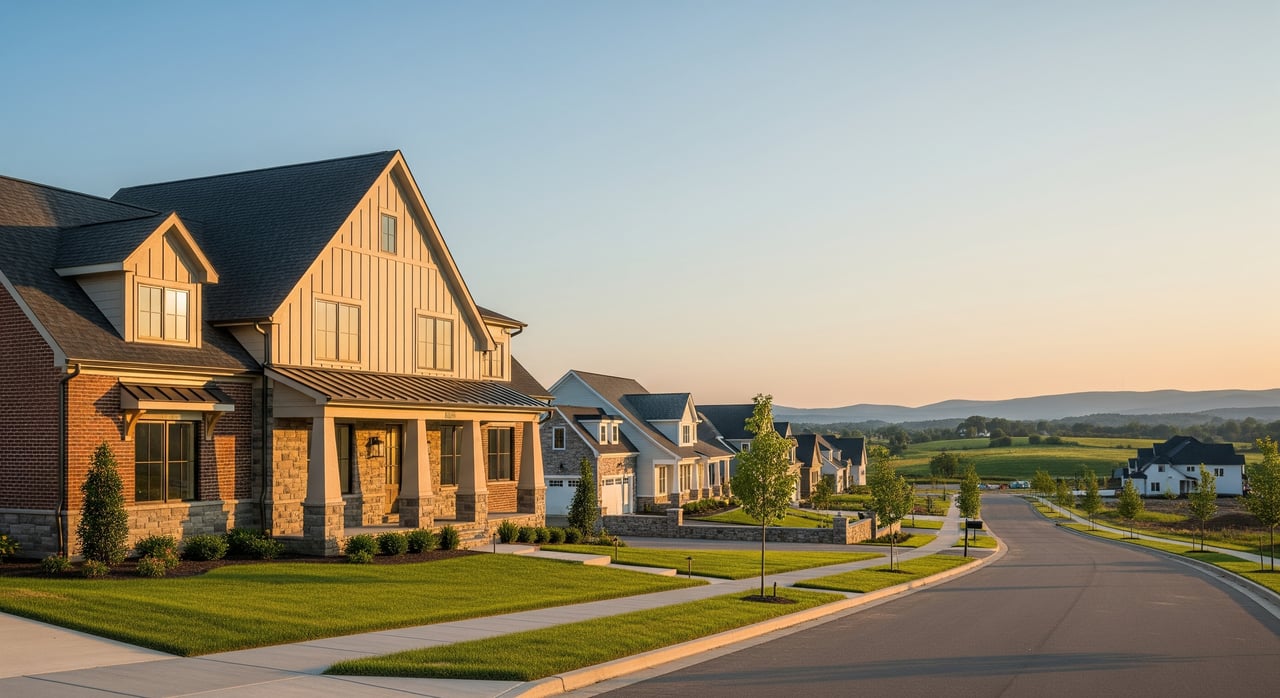
Thinking about a brand-new home in Carlisle but not sure how to compare the options? New construction brings choices you don’t make in resale, from lot premiums and build timelines to warranties and HOA rules. With a clear framework, you can compare apples to apples and choose the right community and builder with confidence. In this guide, you’ll learn exactly how to evaluate builders, lots, timelines, warranties, financing incentives, and spec versus to-be-built homes in the Carlisle area. Let’s dive in.
Carlisle new-build basics
Carlisle sits in Cumberland County, and new communities can fall under the borough or nearby townships like South Middleton, Middlesex, or North Middleton. Each municipality handles permits and inspections on its own schedule. Before you sign, confirm which office will review your plans and issue the certificate of occupancy for your specific lot. Ask the builder for a copy of the final approval timeline and the expected inspection milestones.
Permitting typically includes zoning and building approvals, utility connections, stormwater controls, and erosion and sedimentation measures. Timelines vary by the community’s phase and municipal queue. Weather, subcontractor availability, and material lead times can also affect when you start and finish.
Use this side-by-side comparison worksheet
Create a simple tracker for every Carlisle community you’re considering. Here’s a template you can copy and fill in as you tour model homes and talk with sales staff.
| Community & Builder | Lot #/Size | Base Plan & Price | Lot Premium | Spec Move-in or TBB Timeline | Included Items | Upgrade Process | Warranty (1/2/10?) | Deposits & Refunds | Change-order Policy | Incentives | HOA Dues & Rules | Utilities (public sewer/water, tap fees) | Inspection Rights | Preferred Lender Required? |
|---|
Add notes for nearby schools, commute times, and amenities, and keep copies of the inclusions list, sample contract, and warranty documents.
What drives total cost in Carlisle
Your final price is more than the base model. In Carlisle, lot premiums and site conditions can be a big swing factor. Hilly or irregular lots may require extra grading or retaining walls, while flat lots may be simpler and cheaper to build on.
Key cost drivers to watch:
- Lot premiums tied to view, cul-de-sac locations, size, or privacy.
- Stormwater and grading needs based on topography.
- Utility setup and municipal tap or connection fees.
- Public sewer and water versus well and septic, where applicable.
- Proximity to major corridors like I-81 and Route 11.
- School district assignment within Carlisle Area SD; verify details directly with the district.
When you compare lot premiums, check county assessor data and recent new-home sales to see if the premium aligns with local norms. If the premium feels high, ask if closing-cost credits or rate buydowns are available.
Builder reputation and references
Your builder relationship matters as much as the plan you choose. Ask how long the builder has worked in Central PA, where you can see completed homes, and how warranty requests are handled. Request recent customer references and confirm the builder is properly registered.
Check third-party sources for perspective. The Better Business Bureau and recent customer references can help you spot patterns in follow-through. Industry organizations such as NAHB publish resources on standards and warranties that can help you ask sharper questions.
Timelines and scheduling
A realistic single-family build in suburban Pennsylvania often takes 6 to 10 months after construction starts, with total time from contract potentially longer if permits or infrastructure aren’t ready. Your path usually looks like this: contract and deposits, plan and permit approvals, construction start, framing and rough mechanicals, finishes, inspections, certificate of occupancy, and closing.
Ask each builder for their average time from contract to start and from start to close. Clarify how delays are handled, whether any dates are guaranteed, and if the contract includes remedies for missed milestones. Ask who carries the risk if interest rates change during construction and what options you have to lock a rate.
Warranties and post-closing service
Most builders follow a familiar “1-2-10” structure: one year for workmanship and materials, two years for systems, and ten years for major structural defects. Some use third-party structural warranties. Confirm what is covered, what’s excluded, and when coverage starts.
Ask how to submit warranty claims, who performs repairs, and typical response times. Review the written warranty and the builder’s owner manual or maintenance checklist. For context on common warranty structures, see NAHB resources on builder warranties.
Spec versus to-be-built homes
Spec homes
A spec home is already built or nearly complete. You get faster move-in and can walk the finished product, which makes decisions easier. The tradeoff is limited choice in finishes and layout.
To-be-built (TBB)
With TBB, you choose the lot and options, and construction starts after approvals. You can customize layout, finishes, and orientation, but you’ll wait longer and manage more decisions. If the contract fixes your price, you may benefit if the market rises during construction. If not, clarify how material or pricing changes are handled.
Quick-move options
Some builders offer “quick-move” homes that are partially complete. They can deliver sooner than a full TBB while still allowing a few design choices.
Contracts, financing, and incentives
Many builders use their own purchase agreements. Review deposits and refundability, included features, inspection rights, change-order rules, and timelines. Consider having an attorney review the contract so you understand remedies for delays and the exact warranty terms.
Builders often provide incentives for using a preferred lender, such as closing-cost credits or rate buydowns. Compare the net cost across lenders, including fees and lock options, before you decide. If you are using VA or FHA financing, confirm the builder and property meet the program’s requirements. For general guidance, review the HUD consumer guide to buying a home.
HOAs, covenants, and long-term fees
New communities frequently have HOAs. Review the declarations and rules for exterior changes, fencing, sheds, or rental policies. Ask about current dues, budget, reserve studies, and whether the HOA has transitioned from developer control.
If roads, amenities, or stormwater systems are private, clarify who pays to maintain them over time. Ask about any planned assessments.
Inspections and independent oversight
Even new homes benefit from independent inspections. Ask if you can schedule inspections at key milestones such as pre-pour foundation, pre-drywall, and final. Independent inspectors can document issues and help you confirm that items are completed before closing.
For best practices on new-home inspections, review ASHI guidance on inspecting new construction. Keep in mind that builders will also perform their own quality checks and walk-throughs; your inspector adds another layer of confidence.
Model-home questions to bring with you
Use this checklist when you visit each community.
Lot and community
- What is the exact lot number, dimensions, and grading plan? May I see the plat?
- Is there a lot premium? What specifically justifies it?
- Who maintains streets and common areas? When does the HOA transition to homeowners?
- What are the current dues and expected increases? Any special assessments planned?
Pricing, deposits, and options
- What is the base price for this plan on this lot, and what’s included? Provide a written inclusions list.
- What is the lot premium amount today? Is it negotiable under certain conditions?
- What is the deposit schedule and which deposits are refundable?
- What allowances are included for cabinets, flooring, counters, and lighting? How are upgrades priced?
Timeline and contingencies
- What is the expected start and completion date? What events could change these dates?
- Do you guarantee a closing date or offer remedies for late delivery?
- How long do permits typically take here, based on recent builds?
Construction and inspections
- Can I schedule independent inspections at pre-pour, pre-drywall, and final?
- What is your process for the final walk-through and punch list? How are items documented and cleared?
- Do you provide a home orientation and owner manual?
Warranties and service
- Please provide the written warranty. What is covered for 1, 2, and 10 years?
- Who administers warranty claims and typical response time?
- Are subcontractor warranties included and for how long?
Contracts, change orders, and closing
- Can my attorney review the contract? For how long before it becomes binding?
- How are change orders priced and approved? Are they cost plus, fixed price, or another method?
- What are estimated closing costs and who pays which fees?
- What incentives are offered with the preferred lender? Are incentives contingent on using them?
Mechanical, energy, and materials
- What HVAC type and efficiency ratings are included? What are the equipment brands and warranties?
- What are insulation R-values? Any energy certifications?
- Are fire sprinklers required? What about smoke and CO detector locations?
Sitework and utilities
- Are public water and sewer available? Who pays tap or connection fees?
- Are there known drainage or stormwater plans affecting this lot?
- Is a soil report available? Any expectation of extra grading or retaining walls?
Resale and restrictions
- Are there deed restrictions or design guidelines? How do approvals work for exterior changes?
- What are estimated property taxes for a completed home here?
Score your top choices
Use a simple rubric to compare communities:
- Builder reputation and references — 25%
- Price and lot premium value — 20%
- Warranty and post-closing service — 15%
- Timeline predictability and contract protections — 15%
- Standard inclusions and upgrade flexibility — 10%
- HOA and long-term fees/governance — 10%
- Inspection and oversight flexibility — 5%
Rate each category on a 1 to 5 scale, multiply by the weight, and total your scores. Keep notes on anything unique, like a steep corner lot that may require additional retaining walls.
What to do next
If you plan to tour model homes, remember that on-site sales staff typically represent the builder. You deserve someone in your corner to help you compare lot premiums, negotiate incentives, arrange independent inspections, and review timelines and warranty terms before you sign. Bring your contract and community documents to a quick consult and get a second set of eyes.
Have questions or want a local, hands-on advocate for Carlisle new construction? Reach out to Ajay Patel for a friendly, no-pressure conversation about your options.
FAQs
How long does a new build in Carlisle usually take?
- Many single-family builds take about 6 to 10 months after construction starts, with total time from contract possibly longer due to permitting and infrastructure.
Are lot premiums negotiable in Carlisle communities?
- Often yes, especially later in a phase or if similar lots remain unsold; builders may also offer closing-cost credits or rate buydowns instead.
Should I hire an independent inspector for a new home?
- Yes, staged inspections at pre-pour, pre-drywall, and final provide objective oversight beyond builder walk-throughs and can support warranty requests.
What are common builder warranties I should expect?
- Many builders follow a “1-2-10” model covering workmanship, systems, and structural components; request the written warranty and claim instructions.
Do I have to use the builder’s preferred lender to get incentives?
- Some incentives are tied to using a preferred lender, but you should compare total costs and terms across lenders before deciding.